Brain Tumor Center
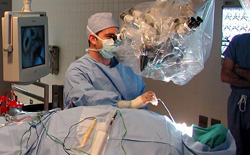
The Brain Tumor Center at the University of Cincinnati (UC) Neuroscience Institute offers hope, compassion, expertise and the world’s most advanced technologies to patients from across the region and around the world.
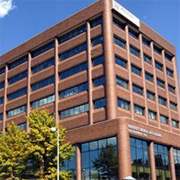
One of nine centers within the UC Neuroscience Institute, we are closely affiliated with University of Cincinnati Medical Center (UCMC), UC College of Medicine, and the UC Barrett Cancer Center at UCMC.
Comprehensive Stroke Center
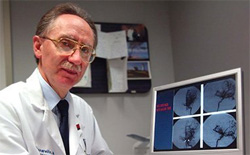 The Comprehensive Stroke Center, together with the Greater Cincinnati/Northern Kentucky Stroke Team and the surgical/interventional neurovascular program provides a comprehensive center for stroke prevention and treatment of transient ischemic attack (TIA), ischemic stroke, aneurysm, arteriovenous malformation, and other cerebrovascular issues.
Our internationally renowned faculty plays a leading role in clinical research and basic science studies, and the Comprehensive Stroke Center receives referrals from across the Midwest and around the world.
Read More about the Comprehensive Stroke Center
The Comprehensive Stroke Center, together with the Greater Cincinnati/Northern Kentucky Stroke Team and the surgical/interventional neurovascular program provides a comprehensive center for stroke prevention and treatment of transient ischemic attack (TIA), ischemic stroke, aneurysm, arteriovenous malformation, and other cerebrovascular issues.
Our internationally renowned faculty plays a leading role in clinical research and basic science studies, and the Comprehensive Stroke Center receives referrals from across the Midwest and around the world.
Read More about the Comprehensive Stroke CenterEpilepsy Center
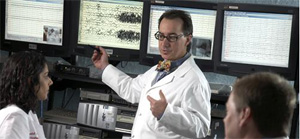
Physicians at the Epilepsy Center at the UC Neuroscience Institute diagnose and treat hundreds of adult patients from across the region each year. Our multidisciplinary team has been together longer than any other epilepsy team in the country. It includes epileptologist, a neurosurgeon who specializes in epilepsy surgery, neuropsychologists, nurse clinicians, neuroscience nurses, and registered EEG technologists.
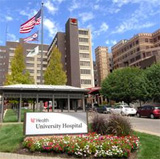
The Epilepsy Center is the region’s only adult center with a Level IV rating—the highest rating possible—from the National Association of Epilepsy Centers.
Memory Disorders Center
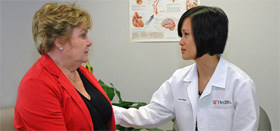
Welcome to the Memory Disorders Program at the UC Neuroscience Institute. Whether you have come to us seeking a diagnosis, a leading treatment, or a path forward, we will provide you or your loved one with advanced, compassionate and competent care.
Disorders Center
 The Mood Disorders Center at the UC Neuroscience Institute employs the most advanced methods to diagnose and treat adult and adolescent patients from across the Greater Cincinnati region. Our physicians are experts in the diagnosis and treatment of depression, bipolar spectrum disorder, anxiety disorders, cyclothymia and dysthymia. We treat mood disorders induced by alcohol or substance abuse.
Read More about the UC Mood Disorders Center
The Mood Disorders Center at the UC Neuroscience Institute employs the most advanced methods to diagnose and treat adult and adolescent patients from across the Greater Cincinnati region. Our physicians are experts in the diagnosis and treatment of depression, bipolar spectrum disorder, anxiety disorders, cyclothymia and dysthymia. We treat mood disorders induced by alcohol or substance abuse.
Read More about the UC Mood Disorders Center
Neurobiology Research Center
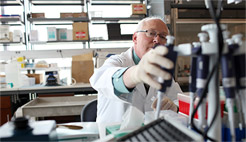
The UC Neurobiology Research Center highlights the importance of discovery to the University of Cincinnati Neuroscience Institute’s mission of education, research and treatment, and it serves as a driving force for the integration of clinical and basic science research programs.
The Neurobiology Research Center coordinates and awards numerous pilot grants each year to further developing research that has the potential to achieve larger grant funding in the future. UC faculty and senior fellows are eligible to compete for the grants, which emphasize collaboration between basic researchers and clinicians.
This Center of Excellence also plays a key role in coordinating recruitment of new neuroscientists at the University of Cincinnati, and enhances an already strong Neuroscience Graduate Training Program.
Neuromuscular Center

The Neuromuscular Center at the UC Neuroscience Institute employs the most advanced technologies and therapies to diagnose and treat hundreds of adult patients from across the Greater Cincinnati region each year. Our physicians are experts in the diagnosis and treatment of neuromuscular disorders, which can encompass everything from common low back pain with lumbar nerve root compression (lumbar radiculopathy) to very specific disorders of muscle strength and deterioration (muscular dystrophy). We provide compassionate and comprehensive care to patients who are struggling with these difficult diseases.
Neurosensory Disorders Center
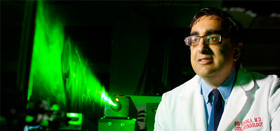
The ability to speak, hear, taste, smell and swallow are integral to our everyday social interactions, whether at work, at home, or at leisure. The loss of any one of these abilities, which are so often taken for granted, can profoundly affect a patient’s physical and emotional well-being.
Fortunately for people struggling with disorders of the senses, otolaryngologists (ear, nose and throat physicians) at the UC Neuroscience Institute are skilled in the latest ways to diagnose and treat these often debilitating disorders. Many of these disorders require straightforward lifestyle changes (such as smoking cessation) to dramatically improve the function of the senses involved.
In addition, neurosurgeons at the center are internationally recognized for their work in research and treatment of trigeminal neuralgia (facial pain) and other functional pain disorders.
Neurotrauma Center
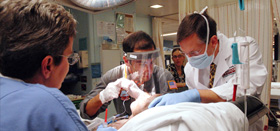
The UC Neuroscience Institute Neurotrauma Center treats patients with traumatic brain and spine injuries. It is based at the Trauma Center at the University of Cincinnati Medical Center, the only Level 1 adult trauma center in the region. Recognized regionally and around the country for its leadership in trauma care, the Trauma Center is nationally certified by the American College of Surgeons. In addition, UC Medical Center is home to a nationally certified Adult Burn Unit, the only such unit in the region.
The specialists of the Neurotrauma Center play a life-saving and life-enhancing role in this multidisciplinary effort, and are supported by University Air Care (one of the nation’s most advanced emergency air medical transport services) and the Center for Emergency Care at UC Medical Center.
Gardner Center for Parkinson’s Disease and Movement Disorders

The James J. and Joan A. Gardner Family Center for Parkinson’s Disease and Movement Disorders at the UC Neuroscience Institute is one of the most progressive centers of its kind. Our physicians provide each patient with world-class care, beginning with a team analysis by movement disorder experts in the fields of neurology, neurosurgery, and neuropsychiatry.
Experts at the Gardner Family Center treat all movement disorders, including Parkinson’s disease, essential tremor, dystonia, and Huntington’s disease. Physicians are often capable of lessening the symptoms of Parkinson’s and other movement disorders through medications and surgical interventions that stimulate the area where nerve cells are affected.
Read More about the Gardner Center for Parkinson’s Disease and Movement Disorders
Waddell Center for Multiple Sclerosis

The Waddell Center for Multiple Sclerosis at the UC Neuroscience Institute is a regional center of excellence, certified member of the National MS Consortium, and an affiliate of the National MS Society. Our internationally recognized team of neurologists, nurses, and therapists works to provide the best treatments available.
The team also includes dedicated researchers who are studying the underlying mechanisms of MS in laboratories and conducting clinical trials funded by foundation grants and the National Institutes of Health.
Continuity of care is essential to help MS patients reach their maximum potential. To achieve this, our physicians remain intimately involved in the care and treatment of MS patients throughout their rehabilitation.
Headache and Facial Pain Program

The UC Health Headache and Facial Pain Program offers hope to people who suffer from pain and haven’t found adequate relief.
While an occasional headache is common, when head pain becomes chronic or debilitating, finding answers and relief may be much more difficult.
UC Health brings together some of the nation’s foremost experts on headache and facial pain in a unique and rare program designed to bring answers and healing.
Neurocritical Care Program
For patients who are confronting serious injury, severe symptoms, complex surgery or a challenging diagnosis, a short hospital stay and quick recovery are not always possible. They and their families can rest assured, however, that the UC Neuroscience Institute has the most advanced resources, technology and expertise available anywhere in the world. These resources, provided 24 hours a day, are nowhere more evident than in Neurocritical Care.
The ultimate goal of neurocritical care is to resuscitate and support the acutely ill neurological patient, minimize secondary neurological injury and medical complications, and facilitate the patient’s transition to a recovery environment.
Neurorestorative Program
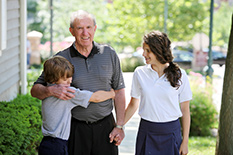
The Neurorestorative Program at the University of Cincinnati Neuroscience Institute is an integrated multidisciplinary program focused around one goal: restoring function to patients who suffer from painful or life-altering neurological impairments. The Neurorestorative team includes renowned specialists who focus on innovations in the surgical treatment of neurological disorders such as Epilepsy and movement disorders, along with medical treatment of psychiatric disorders such as obsessive-compulsive disorder and depression.
Many patients who benefit from Neurorestorative services also interact with other areas of the Neuroscience Institute in order to receive the most comprehensive care available. With help from our Neurorestorative Program patients see improvements in symptom control and an increasingly better quality of life.
UC Neuroscience Institute Leading the Advance in Neurological Care
 The University of Cincinnati Neuroscience Institute, a collaboration of the UC College of Medicine and UC Health, is a leading treatment, research and teaching center for complex neurological conditions that includes more than 100 faculty members from 15 clinical specialties.
Through its centers of excellence and premier programs, the Institute advances compassionate, patient-centered neurologic and psychiatric care, life-changing research, and comprehensive education. Its physicians and researchers have created national models for evidence-based treatment and research of complex neurologic conditions, including ischemic and hemorrhagic stroke, brain aneurysms, brain and spinal cord trauma, brain tumors, Parkinson’s disease, epilepsy and seizure disorders, multiple sclerosis and trigeminal neuralgia.
The University of Cincinnati Neuroscience Institute, a collaboration of the UC College of Medicine and UC Health, is a leading treatment, research and teaching center for complex neurological conditions that includes more than 100 faculty members from 15 clinical specialties.
Through its centers of excellence and premier programs, the Institute advances compassionate, patient-centered neurologic and psychiatric care, life-changing research, and comprehensive education. Its physicians and researchers have created national models for evidence-based treatment and research of complex neurologic conditions, including ischemic and hemorrhagic stroke, brain aneurysms, brain and spinal cord trauma, brain tumors, Parkinson’s disease, epilepsy and seizure disorders, multiple sclerosis and trigeminal neuralgia.