[San Diego, September 10th] – Vagal.com, a leader in accessible vagus nerve stimulation technology, today announced the launch of Vagal Oh!, a ground-breaking wireless, non-invasive vagus nerve stimulator that represents a quantum leap in personal wellness technology. The ultra-compact device incorporates proprietary EverSteady technology, establishing a new gold standard for safe consumer nerve stimulation.
Breaking the Size Barrier in Wellness Technology
At just 23mm, Vagal oh! is the world’s smallest wireless vagus nerve stimulator, making advanced wellness technology truly portable without compromising effectiveness. The device’s revolutionary miniaturization represents years of engineering innovation, bringing medical-grade nerve stimulation capabilities to a form factor smaller than most fitness trackers.
“We’ve fundamentally reimagined what’s possible in vagus nerve stimulation,” said Hannah, Customer Relations at Vagal.com “Vagal Oh! proves that cutting-edge wellness technology doesn’t require bulky equipment or complex setups. This is vagus nerve stimulation made beautifully simple.”
EverSteady Technology: The New Gold Standard
The device’s cornerstone innovation, EverSteady technology, addresses the primary safety concerns that have limited consumer access to vagus nerve stimulation. This proprietary system automatically monitors and adjusts stimulation parameters in real-time, ensuring optimal therapeutic benefit while maintaining the highest safety standards.
EverSteady technology features:
- Adaptive Current Regulation: Automatically adjusts stimulation intensity based on individual physiological responses
- Continuous Safety Monitoring: Real-time impedance checking prevents overstimulation
- Precision Targeting: Advanced algorithms ensure stimulation reaches optimal nerve pathways
- Zero-Drift Guarantee: Maintains consistent therapeutic parameters throughout each session
Clinical Foundation Meets Consumer Accessibility
Vagus nerve stimulation has been extensively studied for its benefits on stress reduction, sleep quality, mood regulation, and overall wellness. However, previous devices required clinical settings or complex home installations. Vagal oh! democratizes this technology, making it accessible to anyone seeking to optimize their autonomic nervous system.
“The vagus nerve is essentially your body’s reset button,” explained Dr. Brown, an independent neurologist specializing in autonomic disorders. “What Vagal has achieved with EverSteady technology is remarkable – they’ve made this powerful therapeutic modality both safe and simple enough for daily home use.”
Market Impact and Availability
The wellness technology market has seen unprecedented growth, with consumers increasingly seeking evidence-based solutions for stress management and overall health optimization. Vagal Oh! enters this market with a unique value proposition: medical-grade efficacy in an ultra-portable, user-friendly package.
Key market differentiators include:
- Wireless Freedom: No cables, electrodes, or complex setup requirements
- Ultra-Portable Design: Fits easily in pocket or purse for wellness on-the-go
- Medical-Grade Safety: EverSteady technology ensures clinical-level safety standards
- Consumer-Friendly: Designed for daily use by wellness enthusiasts, not medical professionals
About Vagal
Founded on the principle of making advanced wellness technology accessible to all, Vagal has been pioneering consumer vagus nerve stimulation solutions since 2019. The company’s mission, “Vagally Better,” reflects its commitment to improving lives through innovative nerve stimulation technology. Vagal’s products combine rigorous scientific research with elegant design, bringing clinical-grade wellness solutions to the consumer market.
Ordering Information
Vagal Oh! is available for immediate order through vagal.com. Early adopters can take advantage of introductory pricing and free shipping worldwide.
Order now at Vagal.com
Media Contact: Hannah Vagal Phone: +1 678 VAGALLY Email: [email protected] Website: https://vagal.com
High-resolution images, technical specifications, and interview opportunities available upon request.
About This Release: This press release contains forward-looking statements about Vagal’s products and technology. While based on current research and development, individual results may vary. Vagal oh! is designed for wellness purposes and is not intended to diagnose, treat, cure, or prevent any disease.
]]>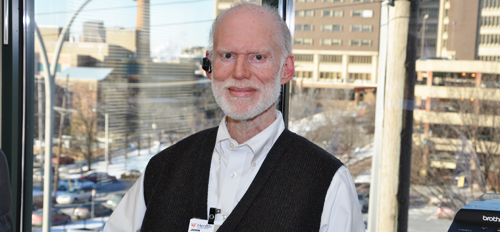
Neuromuscular specialist John Quinlan, MD, at the UC Academic Health Center. Photo by Cindy Starr.
The world has wept a collective tear during the last several months following the surge of babies born with small heads and underdeveloped brains, the unproven but likely effect of mothers infected with the mosquito-borne Zika virus during pregnancy. But babies may not be the only ones at risk from complications of Zika, which is carried by the Aedes aegypti mosquito.
The World Health Organization (WHO), in its “Zika Situation Report” of Feb. 26, stated that although links to the Zika virus infection remain circumstantial, “a growing body of clinical and epidemiological data points towards a causal role for Zika virus” not only in the microcephaly seen in newborns, but also in Guillain-Barré syndrome (GBS). Guillain-Barré is a rare and potentially life-threatening autoimmune disorder in which the body attacks the peripheral nerves and damages their insulating layer (the myelin sheath).
WHO reports that during 2015 and 2016, eight countries and territories have reported an increased incidence of GBS and/or laboratory confirmation of a Zika virus infection among GBS cases. A study by researchers in French Polynesia and Europe, published this week in the Lancet, provides strong new evidence of a link between Zika and GBS.
Though less publicized than the deepening microcephaly crisis, GBS is no stranger to the United States, nor to the University of Cincinnati Neuroscience Institute. John Quinlan, MD, a UC Health neurologist and medical director of the institute’s Neuromuscular Center, says he and his colleagues treat 10 to 15 patients with Guillain-Barré each year.
“Some cases are caused by a viral infection, some by a bacterial infection, some by a vaccine,” Dr. Quinlan says. “Many times we don’t know what the cause is.”
Guillain-Barré usually begins with weakness of the legs and mild numbness and tingling in the feet and moves upward. Over days to weeks it can progress to paralysis of the breathing muscles and death. But when caught early, it is curable in most situations. The syndrome can strike people of any age.
“The disease is particularly worrisome because it can attack someone who’s perfectly healthy,” Dr. Quinlan says. “And it comes on pretty fast, over days. It could take a person from normal health to paralysis in five days. And that wouldn’t be a record.”
The good news, he says, is that “we can make such a difference in the outcome.”
Diagnosis can involve the following tests:
• Spinal tap, which can reveal a protein associated with GBS
• Electromyography, which measures nerve activity in the muscles
• Nerve conduction studies, which measure the speed of nerve signals
Because a spinal tap early in the course of the disease can be normal, Dr. Quinlan, a professor of neurology and rehabilitation medicine, teaches his resident physicians to “keep it simple” and focus on testing the patient’s strength exam, reflexes and breathing capacity. “The first thing I’ll ask residents is, ‘What is their breathing capacity like?’ And then we track that carefully.”
Treatment involves one of two therapies:
- administration of high doses of intravenous immunoglobulin, which contains healthy antibodies from blood donors; or
- plasmapheresis, which rids the body of antibodies that are attacking the nerves. Both treatments are equally effective in slowing and eventually stopping the disease and allowing the nervous system to repair itself.
Some patients may need to be placed on a ventilator. Complications that lurk include pneumonia, pulmonary embolism from lack of movement, and cardiac problems. Two-thirds of patients who are treated early will return to normal over a period of weeks to months, Dr. Quinlan says, but the remainder have a slower and incomplete recovery. The death rate is about 5 percent.
Anyone who experiences an unusual weakness of the limbs that worsens over days should call his or her doctor or go to the emergency room, regardless whether or not they visited a country where Zika virus is present.
“Remember,” Dr. Quinlan says, “we see plenty of GBS cases that have nothing to do with Zika.”
For more information about Guillain-Barré syndrome, visit the National Institute of Neurological Disorders and Stroke.
— Cindy Starr
]]>
Michael Privitera, MD, Director of the UC Epilepsy Center. Photo by UC Academic Health Center Communications Services.
Contact: Alison Sampson
(513) 558-4559
[email protected]
While approved generics are required to be equivalent to their brand-named counterparts in terms of active ingredients, some may wonder if a switch between generics could cause problems for someone who relies on daily medication to control a severe, chronic condition, like seizures.
A new study led by Michael Privitera, MD, professor in the Department of Neurology and Rehabilitation Medicine and director of the Epilepsy Center at the University of Cincinnati Neuroscience Institute, tested two generic lamotrigine (prescription antiepileptic) products and found no detectable difference in clinical effects among patients in the trial. The findings were published this week in an advance online edition of The Lancet Neurology.
“Study results show that as long as patients adhere to their treatments, the two generics did not show any difference in their bioequivalence,” says Privitera. “Consequently, it should give increased confidence to both clinicians and patients that existing regulations are providing generic drugs that can be safely substituted, even in cases where medicine is life-saving. Patients can now feel safe about substituting generics (of their antiepileptic drug) without concerns of interactions or undesired effects.”
The study included 35 patients, adults with epilepsy who currently take lamotrigine, and looked at long-term dosing using two currently on-market epileptic generic drugs. The researchers took measures to ensure treatment adherence, a factor that can affect long-term trials. This trial used patient diaries, electronic medication monitoring and tablet counts to keep adherence to nearly 100 percent.
This study was initiated after several previous uncontrolled studies suggested risks with generic switching, but other studies showed no such risk. The American Epilepsy Society (AES) expressed concern over reported differences in antiepileptic generics. AES, the American Academy of Neurology and other professional societies had opposed patients substituting antiepileptic generics for people with epilepsy without consent of the physician or patient out of concern that the U.S. Food and Drug Administration (FDA) was allowing room for too much variability across formulations.
The need for effective generics is essential to some patients who need daily medication to treat serious conditions like epilepsy. The FDA estimates $230 billion per year is saved by generic substitutions.
The FDA, who had not tested generic-to-generic, agreed to fund three studies with AES and the Epilepsy Foundation (EF) as co-funders—referred to as EQUIGEN. This trial used two generics considered the most disparate products on the market, and in a double-blind study, switched patients from one generic to the others throughout the course of the trial.
Lamotrigine, a widely used drug for the treatment of epilepsy, is an ideal drug for this assessment, says Privitera, particularly because it has also been the subject of the noted problems with generic switches and complaints to the FDA. Additionally, it is considered a more sensitive drug, susceptible to drug-to-drug interactions.
With these new findings, a variety of factors could explain the cause for the previously reported inconsistencies, says Privitera. “One is the ‘nocebo’ effect, where patients and clinicians expect the generic products to be inferior, so the therapeutic effect is assumed to be reduced.”
Other issues that led to concern over generic switching could be attributed to pill confusion—because every time a patient switches generics, the pill color or shape will change—or that the quality of generics are improving over time, says Privitera.
The study was developed through collaborative efforts of the authors, the FDA and several organizations holding widely differing views on generic safety, designed to address skepticism surrounding generic antiepileptic drug treatments, and clear up several criticisms of the standard generic drug approval process. While the study is limited to a drug used extensively in epilepsy and psychiatry, the implications of such findings extend beyond this particular drug, indicating that FDA standards for bioequivalence are appropriate.
To further confirm the findings in this study, a single-dose study of the same generic lamotrigine products is currently underway.
The study’s co-authors included researchers from Drake University, University of Madison-Wisconsin, University of Kansas Medical Center, University of Alabama at Birmingham, Harvard Medical School, University of Pennsylvania, the office of research for the Food and Drug Administration and the University of Rochester.
This study was funded by the American Epilepsy Society, Epilepsy Foundation, and U.S. Food and Drug Administration. Privitera is president of the American Epilepsy Society. He does not cite any conflicts of interest.
]]>
Atsuo Sasaki, PhD, in his lab at the Vontz Center for Molecular Studies. Photo by Cindy Starr.
Contact: Cindy Starr
(513) 558-3505
[email protected]
CINCINNATI—An international research team formed by a University of Cincinnati (UC) cancer researcher has shown for the first time that a specific enzyme is responsible for sensing the available supply of GTP, an energy source that fuels the uncontrolled growth of cancer cells. The research underscores the enzyme’s potential to become a therapeutic target for future cancer drugs.
The findings of Atsuo Sasaki, PhD, assistant professor in the Division of Hematology Oncology at the UC College of Medicine and a researcher at the Brain Tumor Center at the UC Neuroscience Institute and UC Cancer Institute, together with Toshiya Senda, PhD, professor at the High Energy Accelerator Research Organization in Tsukuba, Japan, were published online Jan. 7 in the journal Molecular Cell.
Sasaki and fellow researchers showed that the enzyme PI5P4Kβ (phosphatidylinositol-5-phosphate 4-kinase-β) acts like the arrow on a fuel gauge. The enzyme senses and communicates (signals), via a second messenger, the amount of GTP fuel that is available to a cell at any given time. Until now, the molecular identity of a GTP sensor has remained unknown.
“Energy sensing is vital to the successful proliferation of cancer cells,” he says. “A large amount of GTP is required in rapidly dividing cells, and cells need to know that the fuel is available to them. If we can interfere with the ability of PI5P4Kβ to sense fuel availability and communicate that information, we may be able to slow or halt the growth of cancers, including the aggressive brain cancer glioblastoma multiforme and cancers that have metastasized to the brain.”
The publication in Molecular Cell is Sasaki’s first to address PI5P4Kβ as a molecular sensor of GTP concentration. Initially, he and his team faced skepticism regarding the existence of GTP energy-sensing; however, with a pilot grant funded by Cincinnati’s Walk Ahead for a Brain Tumor Cure and other local sources, the researchers were able to pursue their high-risk research and acquire enough promising data to earn a five-year, $1.67 million grant from the National Institutes of Health in 2014.
“The publication in Molecular Cell is another milestone for Atsuo Sasaki and the UC Brain Tumor Center,” says Ronald Warnick, MD, medical director of the Brain Tumor Center and the John M. Tew, Jr., Chair in Neurosurgical Oncology. “The seeds of this discovery, which were planted locally by friends of the UC Brain Tumor Center and nourished by federal tax dollars, are now bearing their first fruit as we gain a better understanding of cancer’s energy mechanisms.”
GTP—guanosine triphosphate—is one of two energy molecules used by cells. The other is ATP (adenosine triphosphate). ATP handles the bulk of a cell’s energy requirements, while GTP is required for protein synthesis and is a signaling molecule that helps direct processes within the cell. When GTP levels are increased and utilized as fuel by rampaging cancer cells, GTP’s ability to perform its primary goals is compromised.
Sasaki and his team identified PI5P4Kβ as a GTP sensor by demonstrating, in a laboratory setting, its ability to bind to GTP and by demonstrating, at the atomic level by X-ray structural analysis, the molecular mechanism by which it recognizes GTP. They then designed PI5P4Kβ mutant cells that were unable to sense GTP concentration and, as a result, impaired the ability of PI5P4Kβ to promote tumor growth.
His next step is to use both pharmacological and molecular approaches that target PI5P4Kβ in a cell culture and in animal tumor models.
“By unveiling PI5P4Kβ’s role as a GTP sensor, we now have a potential new therapeutic target for patients,” Sasaki says. “If we can find drugs that stop PI5P4Kβ from acting as the fuel indicator, we could get these aggressive and tragic cancers into energy-depleted status.”
Additional co-authors include Nazanin Majd, MD, PhD, assistant professor of neurology at UC, and Kazutaka Sumita, MD, PhD, Satoshi Kofuji, PhD, Yoshiki Ikeda, PhD, and Hirofumi Yoshino, MD, PhD, post-doctoral fellows in the Division of Hematology Oncology and researchers at the UC Brain Tumor Center.
]]>Media Contact: Caitlin Whitehurst
(513) 556-4395
[email protected]
The Schott Foundation has gifted $1.8 million to University of Cincinnati’s Department of Emergency Medicine within the College of Medicine, establishing the Mary Louise “Weezie” Bays Endowed Chair for Stroke Treatment and Prevention Fund. The fund is named for Verkamp’s late mother-in-law and supports research, educational and patient care efforts for stroke treatment and prevention.
“Creating an endowed chair position at the University of Cincinnati is important. It keeps UC competitive as an attractive place to work and ultimately speaks to the Schott Foundation’s goal of working toward the greater good of Cincinnati,” Verkamp said. “UC already has a well-established team dedicated to stroke treatment and care, this gift will help with talent retention.”
Verkamp said he hopes the gift continues to attract premier physicians to UC and UC Health so they can remain at the forefront of stroke education, treatment and research.
“We are so grateful for the Marge and Charles J. Schott Foundation for its investment in our future,” said Opeolu Adeoye, MD, associate professor and co-director of the UC Stroke Team. “The Department of Emergency Medicine is unique nationally in having had longstanding collaborative relationships with Neurology, Neurosurgery and Neuroradiology resulting in a nationally and internationally renowned stroke program here at UC. The endowed chair will allow the department to continually support critical stroke treatment and prevention activities regardless of the vagaries of traditional funding mechanisms for such activities.”
UC’s Department of Emergency Medicine contributed $200,000 to raise the endowed chair fund to $2 million. The Department of Emergency Medicine has been an independent academic unit within the UC College of Medicine since 1984. It is responsible for the medical direction of the University of Cincinnati Medical Center, Center for Emergency Care (CEC) and the Emergency Medicine Residency Training Program.
“For nearly a decade, the Marge and Charles J. Schott Foundation has been making an incredible impact on UC through philanthropy,” said UC Foundation President Rodney Grabowski. “This gift supports a critical area that will ultimately benefit Greater Cincinnati and beyond through advancements in stroke treatment and prevention. We are so grateful for the Schott Foundation’s investment.”
]]>
The sports world is putting more attention on the widespread incidence of concussion, especially among young contact-sport players. Christmas Day saw the premiere of the movie “Concussion” with actor Will Smith as Pittsburgh forensic pathologist Bennet Omalu, who first drew the conclusion about athletes’ repeated concussion leading to chronic brain trauma. This year, the UC Health Department of Orthopaedics & Sports Medicine has pushed forward the body of knowledge on concussion. UC neurologist Joseph Clark, also a certified athletic trainer in the department, published the nation’s first study on how to drastically reduce the number of concussions among athletes.
Medium: Cincinnati Enquirer
]]>
Mary Ann, a registered nurse, was the first to notice that her head was tilting ever so slightly to the left. She was able to ignore it for a while, but over time the tilt became more obvious and disfiguring. Friends began to ask what was wrong with her neck. “It affected my job,” Mary Ann recalls. “It was hard for me to drive, because I couldn’t turn my head to the right. I had to hold the steering wheel with my right hand and hold my head straight with my left. It became really challenging.”
Mary Ann saw several doctors, visited a chiropractor and underwent acupuncture. Nothing helped. Eventually a neurologist at the UC Neuroscience Institute diagnosed her condition as cervical dystonia, an uncommon neurological movement disorder involving involuntary muscle contractions that force the neck into abnormal movements or postures. The neurologist advised Mary Ann that injections of botulinum toxin into her neck muscles would effectively treat her discomfort and deformity.
Botulinum toxin comes from a protein derived from the neurotoxin-producing bacterium Clostridium botulinum (pronounced botch-oo-LINE-um), an organism that can cause life-threatening botulism. Although widely used to vanquish wrinkles – it is marketed as Botox, Dysport, Xeomin and Myobloc – Mary Ann was fearful. “I knew it was a toxin, and the thought of having that injected was really, really scary for me,” she says. “I would schedule an appointment with the clinic, cancel it, schedule it, cancel it. I thought I’d somehow manage the dystonia on my own. But it continued to get worse and worse, to the point where I didn’t want to look in the mirror.”
Finally, Mary Ann found a specialist in Chicago who had led studies about botulinum toxin and dystonia. “I went to Chicago to see her, and she looked at my address and said, ‘What are you doing here? You have one of the best in Cincinnati.’ ”
Home again, Mary Ann found the skilled, knowledgeable and compassionate doctor she was looking for in Alberto Espay, MD, MSc. “He was so wonderful, warm and reassuring,” she says. “I needed to have total confidence in my provider, and he’s been that person. Because of his demeanor, I was able to get my first injections. I noticed the results within a week or two, and it totally gave me my life back, because I can do my job, I can go out in public. I look like a, quote, normal person again.”
Mary Ann gets a series of seven or eight injections every 4 months, and it is never easy for her. “I’m always nervous,” she says. “It does hurt. But it’s a small price to pay for having four months of a normal life afterwards. Dr. Espay has been a blessing, a godsend. He saved my life.”
— Cindy Starr
* * *
Hope Story Disclaimer – This story describes an individual patient’s experience. Because every person is unique, individual patients may respond to treatment in different ways. Outcomes are influenced by many factors and may vary from patient to patient.
]]>
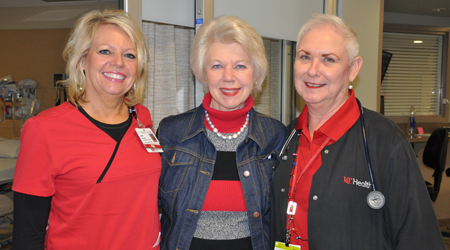
Mary Siereveld, center, prepares to deliver gifts to patients on the neuroscience floor at the UC Medical Center. At left, Lisa Bowman, RN, Nurse Manager on 4 West; at right, Carrie Roark, Medical Assistant at the Gardner Center for Parkinson’s Disease and Movement Disorders. Photos by Cindy Starr.
Mary Siereveld, a brain tumor survivor who delivers socks and a message of hope every December 23rd to patients on the University of Cincinnati Medical Center’s neuroscience floor, was unusually emotional this time.
“It’s my 10th anniversary, and I’m good,” Mary said today, wiping away tears. “I’m healthy. I’m happy, and I just want everyone to have the hope that they’re going to be OK. I want to spread hope that God is good. I want to meet everyone on the fourth floor.”
Mary also wanted to convey a second message about Christmas and giving: “It’s as simple as a pair of socks.”
December 23 will always have special meaning for Mary. On that date in 2005 the Kentucky schoolteacher underwent brain surgery at the UC Medical Center. John M. Tew, MD, a neurosurgeon with the Brain Tumor Center at the UC Neuroscience Institute, removed a 1½-inch by 2-inch tumor that was pressing on Mary’s brainstem. Mary spent Christmas in the hospital, recovering. She also spent many hours thinking about Christmas and the values that were most important to her.

Mary and Dr. John Tew, a year after her surgery at UC Medical Center.
In past years Mary had been immersed in the decorative trappings of Christmas. “My thoughts of Christmas had always been Martha Stewart-like: every corner decorated with red and green, lighted candles in every window, a garland around the front door, cookies baked, all the presents wrapped under the tree, and a from-scratch Betty Crocker fruitcake,” Mary recalls.
But during her stay on the neuroscience floor at the UC Medical Center, her most treasured moments had nothing to do with garlands or wrapping. They included, rather, a kindly visit from two strangers, her first shower after surgery, fresh hospital socks each day, and a lengthy conversation with Dr. Tew on Christmas Day.
“Martha Stewart never came calling that year,” Mary says. “God had other plans for me. Now that I look back, it was the best Christmas ever for me. Angels disguised as doctors, nurses, and hospital staff were so attentive to my needs.”

Mary delivering socks for the first time, in 2006.
Every year since then, on December 23, Mary returns to the hospital with a heartfelt letter and a simple gift for patients who are staying on the neuroscience floor. The gift is a pair of fuzzy socks. “A fresh, clean pair of hospital-issue socks was something that I looked forward to each day,” she remembers. “They were warm. They were versatile. I wore them all day and all night. With the help of a physical therapist, I walked up and down the halls a few times a day in them. It was a small thing, but I grew to love them each day when I received them. They symbolized consistency, and they were tangible things that were literally taking me down the road to recovery.”
In 2009 Mary and the UC Health Foundation established Mary’s Socks Fund. The fund provides socks for patients with brain tumors during the holidays and also helps to fill basic, unmet needs for patients who experience significant hardship during their illness and hospitalization.
To make a donation to Mary’s Socks Fund through the UC Health Foundation, please contact:
Tricia Mullins
Associate Director of Development
UC Medical Center
234 Goodman Street
Cincinnati, OH 45219
(513) 584-6936 or [email protected]
— Cindy Starr
]]>
The physicians, researchers, managers and associates of the University of Cincinnati Neuroscience Institute, a collaboration of the UC College of Medicine and UC Health, extend a heartfelt thank you to our friends who supported our tripartite mission throughout 2015. With your help we continued to build upon our efforts to provide the best available treatments and family-centered care, to aggressively pursue new therapies and potential cures for neurological disease, and to educate future physicians and the public.
During the past year we have touched the lives of thousands of individuals. Our work has been steadfastly supported by donors, sponsors, private foundations, volunteers and the leaders of our Community Advisory Councils, who together have contributed millions of dollars and hundreds of hours in support of our research and patient education programs. We are grateful for the millions of research dollars we have received from tax-supported institutions that include the National Institutes of Health (NIH), the Department of Defense and the UC College of Medicine. And we are indebted, above all, to our study participants, whose selfless role in clinical trials fuels our research and makes future discoveries possible.
From this memorable year, here is a sampling of highlights:
TRANSFORMATION

Joseph Broderick, MD, Director, UC Neuroscience Institute, speaks during the Neuroscience Institute Campaign Kickoff at Lindner Family Tennis Center in Mason, Ohio. Photo by Joseph Fuqua II / University of Cincinnati.
In August the UC Neuroscience Institute launched a $123 million project that will fund a new world-class outpatient facility for people with neurologic and psychiatric diseases. The campaign also will expand existing research programs, create new research initiatives, spark recruitment of additional physicians and researchers, support new training fellowships, and expand community-wide programming. More than $30 million of the $54.5 million philanthropic goal for the project already has been raised.
The new facility will be designed around a holistic and integrated patient-care model and will help expand services, enhance coordination of clinical care, seamlessly incorporate clinical research and innovative treatments and include supportive services such as rehabilitation therapies and integrative medicine.
“We envision a new hub for the UC Neuroscience Institute that will provide leading-edge, comprehensive care in a single location,” said Joseph Broderick, MD, Director of the UC Neuroscience Institute. “The design and infrastructure will enhance our processes to more efficiently integrate research and education with clinical care and to improve the patient experience. In addition, it will provide space for educational workshops and seminars to benefit the entire community.”
CLINICAL CARE
During the 2015 fiscal year, which ended June 30, 2015, UC Neuroscience Institute clinician-researchers gave their patients access to more than 90 clinical trials.
The University of Cincinnati Medical Center was recertified by the Joint Commission as an Advanced Comprehensive Stroke Center, the highest level of certification, which is reserved for institutions with specific abilities to receive and treat the most complex stroke cases. For the second straight year, the Medical Center also received the Get With The Guidelines–Stroke Gold Plus Achievement Award for implementing specific quality improvement measures outlined by the American Heart Association/American Stroke Association for the treatment of stroke patients.
The National Association of Epilepsy Centers named the UC Epilepsy Center a Level 4 Center, the highest level possible, for an 11th consecutive year.
The University of Cincinnati Medical Center, led by the Brain Tumor Center team, continued to perform seven times more brain tumor surgeries than any other area hospital.
The Waddell Center for Multiple Sclerosis underwent a major expansion with the hiring of four new neurologists, a nurse practitioner, a social worker and two medical assistants. The Waddell Center, never more robust than it is today, can now offer clinical services at the highest level to patients in the tristate and beyond.
The Mood Disorders Center began implementing a collaborative care model at UC Health’s resident internal medicine clinics at Hoxworth Center in Clifton and at the Margaret Mary Hospital system in Batesville, Indiana. The UC Neurosensory Disorders Center provided free voice assessments; UC Health launched a spinal cord injury clinic at the Daniel Drake Center for Post-Acute Care; and multiple centers helped patients and families cope with illness through support groups, exercise classes, aquatic and massage therapy, and yoga classes.
RESEARCH

Pooja Khatri, MD, Professor of Neurology and Director, Acute Stroke Program
During the 2015 fiscal year, which ended June 30, 2015, UC Neuroscience Institute researchers published at least 170 articles in peer-reviewed journals.
The Comprehensive Stroke Center continued to serve as a founding member of two elite NIH-funded clinical trial networks: StrokeNet and NeuroNext, while serving as the national coordinating center for StrokeNet, which directs all NIH-funded stroke trials in the United States.
NIH awarded a $6.8 million, 5-year renewal of the Greater Cincinnati/Northern Kentucky Stroke Study, which has identified 20,000 cases of stroke and transient ischemic attack in a racially diverse, five-county region since 1993. The study has shed light on stroke incidence while creating widespread awareness.
Endovascular specialists at the Stroke Center helped prove that the new generation of clot-removing devices could save more patients who had dangerous, large-vessel blockages than medication alone.
Researchers from the Mood Disorders Center were approved for $12.9 million in funding from the Patient-Centered Outcomes Research Institute (PCORI) to assess strategies for minimizing obesity and weight gain in children with bipolar disorders. Melissa DelBello, MD, is the principal investigator at UC for the study.
The Epilepsy Center completed its part in a $2.6 million, multicenter trial that found that generic antiepileptic drugs were biologically and clinically indistinguishable from brand drugs. The Epilepsy Center also completed the SMILE study, funded by the Shor Foundation, which demonstrated in a scientifically rigorous way that a stress-reduction program reduced seizures in people with medication-resistant epilepsy.
With UC Health’s purchase of a clinical trials practice in Dayton, Ohio, the Waddell Center for Multiple Sclerosis greatly expanded the number of clinical trials it could offer its patients. The Dayton practice includes three clinical trials coordinators and more than a dozen ongoing clinical trials in MS.
The Neurobiology Research Center awarded a record eight peer-reviewed pilot grants, totaling $200,000, for basic science research in Alzheimer’s disease, Parkinson’s disease, schizophrenia, stroke and brain cancer.

Xiaoyang Qi, PhD, researcher at the UC Brain Tumor Center
The research and development of improved therapy for metastatic brain tumors and high-grade gliomas is the focus of $200,000 in pilot grants awarded to three scientists by the UC Brain Tumor Center’s Molecular Therapeutics Program: El Mustapha Bahassi, PhD, Research Assistant Professor in the Division of Hematology-Oncology; Pankaj Desai, PhD, Professor of Pharmacokinetics and Drug Metabolism; and Xiaoyang Qi, PhD, Associate Professor in the Division of Hematology-Oncology.
Brain Tumor Center researchers contributed to a finding by the Cancer Genome Atlas Research Network, a national consortium, that some glioma tumors that appeared to be “lower grade” contained a genetic characteristic that caused them to behave like the most aggressive, high-grade gliomas, also known as glioblastoma multiforme.
The UC Brain Tumor Center began recruitment of an esteemed researcher who will lead efforts to understand, target and prevent the spread of metastatic cancer to the brain while holding the prestigious Harold C. Schott Endowed Brain Tumor Molecular Therapeutics Chair.
UC was admitted into the Northeast Amyotrophic Lateral Sclerosis Consortium, an international research collaborative based in Boston. Membership in the consortium, known as NEALS, positions the UC Health ALS Clinic for acceptance into ALS clinical trials and will enable the clinic to bring the most current clinical ALS research to the Greater Cincinnati-Northern Kentucky region.
Alberto Espay, MD, Medical Director of the James J. and Joan A. Gardner Center for Parkinson’s Disease and Movement Disorders, found that people’s perceptions of the cost of a drug may affect how much they benefit from the drug, even when they are receiving only a placebo.
Researchers in the UC Neurotrauma Center contributed to a finding that progesterone, a naturally occurring hormone in men and women, may not significantly improve outcomes in patients who have suffered a moderate to severe traumatic brain injury.
HONORS

Michael Privitera, MD, Medical Director of the UC Epilepsy Center, became President of the American Epilepsy Society.
Peter Stambrook, PhD, Professor in the Department of Molecular Genetics, Biochemistry and Microbiology and a member of the Brain Tumor Center, was honored by UC with the Lifetime of Achievement in Research Award.
Dawn Kleindorfer, MD, Co-Medical Director of the Comprehensive Stroke Center, was appointed Associate Dean for Faculty Development and Women’s Initiatives at the UC College of Medicine.
David Plas, PhD, Associate Professor of Cancer Biology and a member of the Brain Tumor Center, was named the inaugural holder of the Anna and Harold W. Huffman Endowed Chair in Glioblastoma Experimental Therapeutics.
Tom Mueller, an integral member of the James J. and Joan A. Gardner Family Foundation, was honored with the 2015 Sunflower Victory Award at the Sunflower Revolution Symposium & Expo for inspiring, empowering and giving hope to others in the Parkinson’s disease community.
David Hom, MD, an otolaryngologist with the Neurosensory Disorders Center, and Daniel Woo, MD, MS, Director of Clinical Research for the UC Neuroscience Institute, were inducted into the Alpha Omega Alpha Honor Medical Society.
Alberto Espay, MD, was named a Health Care Heroes finalist in the provider category by the Cincinnati Business Courier. Brian Wiles and his brother, Joe Wiles, co-chairs of Walk Ahead for a Brain Tumor Cure in 2012, 2013, 2014 and 2015, were named finalists in the community outreach category.
EDUCATION
The UC Neuroscience Institute continued its commitment to community education by hosting its 11th Sunflower Revolution Parkinson’s Disease Symposium & Expo, which has provided education and inspiration to more than 4,600 patients, family members and caregivers affected by Parkinson’s disease since 2005.
The Institute also presented the Midwest Regional Brain Tumor Conference, the UC Mood Disorders Center’s symposia for the community and for mental health professionals, a conference on the cognitive effects of anti-cancer therapies, and a sold-out public symposium for people affected by epilepsy. With support from the Charles L. Shor Foundation, the Epilepsy Center held its annual symposium about stress and epilepsy, which attracts national leaders in the field.
COMMUNITY

We would not be where we are today without the members of our Community Advisory Councils. A special salute to our Advisory Council Chairs: Kathy Beechem (Brain Tumor Center) and Adam Mueller (Gardner Center for Parkinson’s Disease and Movement Disorders).
A $3 million gift from the Anna and Harold W. Huffman Foundation created the Brain Tumor Center’s third endowed chair as well as a dedicated research program to drive new treatments for glioblastoma, the most aggressive type of brain cancer.
A generous donation from the Harold C. Schott Foundation continued to support a nurse navigator at the UC Neuroscience Institute, while ongoing monies from the MS Clinic Fund under the leadership of Lee Carter and Eric “Buck” Yeiser support a nurse practitioner at the Waddell Center for Multiple Sclerosis. The Comprehensive Stroke Center continued to benefit from gifts and the ongoing legacy of Bonnie Mitsui and her foundation.
A generous donation from Dorothy “Bunny” Whitaker enabled the Memory Disorders Center to add a nurse practitioner and social worker to its multidisciplinary team.
Harry “Tim” Brown honored his wife and soul mate with a $100,000 gift to the ALS Fund, enabling the Neuromuscular Center to better serve patients’ complex needs.
The 2015 Walk Ahead for a Brain Tumor Cure, co-chaired by Brian Wiles and his brother, Joe Wiles, attracted more than 3,400 participants and raised more than $330,000. The 6-year-old walk has now raised more than $1.3 million for education and research at the Brain Tumor Center.
The Parkinson’s Disease Support Network of Ohio, Kentucky & Indiana donated $35,000 in proceeds from the annual Jerry Wuest-Pete Hershberger Dinner Gala & Golf Classic to the Gardner Family Center, bringing PDSNOKI’s total giving since 2004 to $457,000.
The UC Neuroscience Institute also enjoyed proceeds from:
- The Annual Wine Tasting Event, chaired by Rich Seal and Scott Hau for the Brain Tumor Center
- The Shemenski Bowl-A-Thon, spearheaded by Jeff Eggleston for the Brain Tumor Center
- Mary’s Socks Fund, which provides socks for patients with brain tumors during the holidays and also helps to fill basic, unmet needs for patients who experience significant hardship during their illness and hospitalization
- The Forget-Me-Not Gala, a dinner fundraiser chaired by Arden Steffen and Tara Steffen for the Memory Disorders Center
- Putting for Parkinson’s, led by Joy and Scott Layman for the Gardner Center
- Chipping Away at Parkinson’s, led by Paul Lake and Bob Dames for the Gardner Center
IN MEMORIAM
With sorrow and enduring gratitude, we also remember members of the UC Neuroscience Institute family who passed away this year:
Charles Kuntz, IV, MD, Professor of Neurosurgery and an internationally recognized expert in complex diseases, disorders and injuries of the spine
Pete Hershberger, Parkinson’s hero and co-anchor of the Jerry Wuest-Pete Hershberger Dinner Gala & Golf Classic
Michael Wood, MD, distinguished otolaryngologist and captain of Dr. Mike’s Mischief Makers in the Walk Ahead for a Brain Tumor Cure
In closing, we thank you again for your continuing generosity and support, and we extend our very best wishes to you and your family for a healthy and prosperous 2015.
Sincerely,
Joseph Broderick, MD, Director, UC Neuroscience Institute
Lori Uphaus, Administrative Director, UC Neuroscience Institute
Peggy A’Hearn, Director of Development, College of Medicine
— and the entire UC Neuroscience Institute Team